Monday, November 7, 2011

Day 148: We have Lift-off

We knew our day at the Kennedy Space Center would be fun, but we were unprepared for the range of emotions we experienced. For all that we love adventure, we're couch-potato wimps compared to the men and women who have built the U.S. space industry over the past 60 years. It's incredible to live in a day when the impossible has been accomplished...humans walking on the moon...and it happened more than 40 years ago! Who knows what milestones will be reached in our lifetime?

We were sad to learn so much about the shuttle program and know that it will never fly again. That 30-year chapter is over. And at the risk of offending some, we wish that much of the money that's spent on government subsidies and welfare entitlement programs would be returned to the space program. It's a field that stirs the imagination as almost nothing else in the world.

Our tour took us inside the Vehicle Assembly Building, in which all of the Apollo, Gemini and Shuttle missions were built. It's an immense structure, visible from miles around. Its current occupant (in one of its four huge, vertical bays) is the Endeavor orbiter. We learned that the term "shuttle" applies to the complete package of space plane (orbiter), two solid-fuel rocket boosters, and the external fuel tank. Endeavor flew one of the last missions of the program. She's being prepared for transport to her new home in Los Angeles, where she will be permanently displayed in a museum. The orbiter Atlantis, which flew the program's last mission, will remain at Kennedy, which is constructing a new facility for her display.

Other highlights of our day were experiencing a simulated shuttle launch (fun!!) and viewing the 3-D IMAX about the International Space Station. To top off the techie venues, we also saw a bald eagle, an alligator, wild pigs (including lots of piglets) and dolphins...all in the wild. We couldn't have asked for a more memorable time. Truly wonderful.

Spectacular sunrise over the Atlantic

Inside the Vehicle Assembly Building, orbiter Endeavor behind us.

Launch pad 39A...from which all of the Apollo missions and more than half of the shuttle missions blasted off.

The Vehicle Assembly Building, with the transport tracks leading from it to the launch pads.


Endeavor is being gutted and overhauled before being put on permanent display in Los Angeles.

Sunday, November 6, 2011

Day 147: So happy with F's

The F's in our day were First Presbyterian online, fresh air on the beach, football games, and family--getting together with my uncle, aunt and cousins in Florida. All in all, a fantastic first day in the Sunshine state. The best part of it was meeting my Uncle Jeff and his family for dinner; our last time together was at my dad's funeral, so this reunion was much happier and relaxed. We're grateful for the opportunity this trip has given us to reconnect with so many friends and family; today was no exception.

Tonight it's early to bed so we're well-rested for tomorrow's visit to the Kennedy Space Center on Cape Canaveral. We'll see the Vehicle Assembly Building, in which shuttles and rockets are built. The building has been closed to the public since 1978; this new tour was launched--no pun intended!--last Tuesday. Three, two, one...pillow.

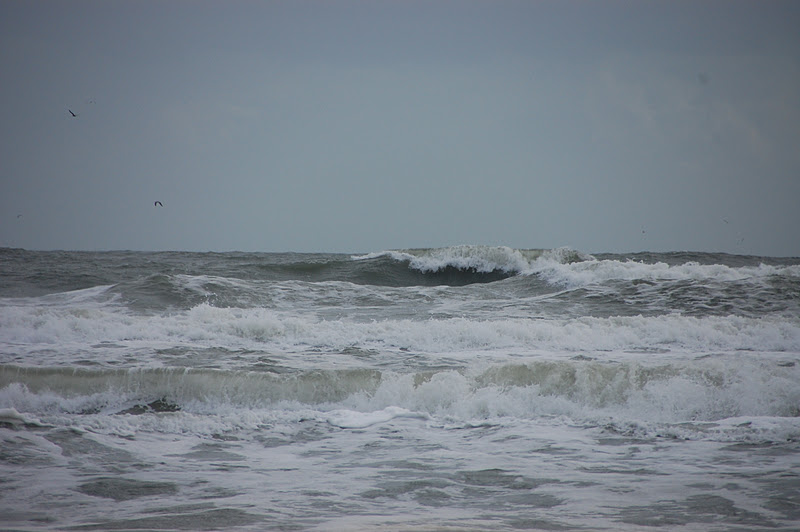
Strong winds last night created huge drifts of sand, nearly covering these tables. The weather pattern also brought rip currents and high waves, so we stayed out of the water.


My uncle is the shy one hiding in the back row. :-)

Saturday, November 5, 2011

Day 146: International Flavor

Over the course of our drive to Florida, we explored a British fort, its adjacent town laid out in a perfect grid; a coastal plantation whose slaves were from western Africa; an ancient, native American population who, for thousands of years, farmed and hunted in the tidal waters of the Southeast coast; a French fort that was attacked by Spaniards. All of these places are within 100 miles of each other. Our day underlines America's reputation as a "melting pot" of humanity.

Fort Frederica, in southern Georgia near Jekyll Island, was a British fort established along the northern edge of what was termed "debatable lands," the neutral zone between lands claimed by Spain and those claimed by Britain. A British captain, Oglethorpe, determined the necessity and location of the fort and recruited skilled workers from Scotland, Germany and other countries to support the military encampment. The town was laid out in a perfect grid within the protective confines of a moat. Though only ruins remain, the shadows of roads among the rows of live oaks give an impression of a tidy English village. We wondered what the recruited inhabitants thought of the new world: the oppressive heat and humidity of summer, the extroverted alligators, swarming insects, malaria. The list of challenges is long; it's no surprise that the military outpost melted away as the need for the it lessened with the establishment of England's dominance in the colonizing of America.

Fort Caroline, a French fort built as a stopover on the trade route, is one of the four sites within the National Park Service's Timucuan Preserve. The park's namesake was a people who lived in the region for centuries before European explorers laid claim to it. They passed along much of their farming and fishing knowledge to colonies and forts, helping the newcomers to survive in the harsh environment. Their influence was also put to good use on the Kingsley plantation, across the St. John River from Fort Caroline. The plantation was supported by many slaves, who lived in 25 huts. They farmed cotton and created great wealth for their owner.

We're settled on Florida's northeastern coast and look forward to some splash-time in the Atlantic tomorrow, weather permitting. It's quite gusty and cool this evening, and there are warnings of dangerous riptides and rough seas for the next few hours. We have lots of fun places to visit over the next few days, and we aren't going to let some less-than-ideal weather get in the way!

Live oaks, draped in Spanish moss, delineate the streets of the former town of Fort Frederica

The Junior Ranger program at Fort Frederica was very creative...Kendall opted to wear an English cap, and Kelsey checked our surroundings with a provided telescope. The ruins of the military fort are in the background.

The slaves on the Kingsley plantation lived in a hut village; they would have looked like the one below...with a roof but no windows.


We traveled across the St. John river aboard an auto ferry. A flock of pelicans saw us off for the 3-minute voyage.

The rebuilt site of Fort Caroline, on the east side of present-day Jacksonville, Fla.

Friday, November 4, 2011

Day 145: the good, the bad and the ugly

Almost 36 years ago, Jimmy Carter was inaugurated as the nation's 39th President. And while his four years in office are not considered stellar in the minds of many historians, there's little doubt that he is perhaps the most decent man to ever work in the Oval Office. He was born and raised in rural, agricultural southwest Georgia, where he continues to make his home. The town of Plains was home to just 700 residents when he made his successful campaign in 1976. Today, the Jimmy Carter national historic site encompasses many spots in the town, including his boyhood farm and his high school (deactivated in 1979) that serves as the visitor center.

Both Jimmy and Rosalynn (his wife of 65 years) faithfully attend their local church, which is so small that the congregation handles its janitorial duties; the Carters take their turn every couple of months, raking, mowing, cleaning toilets, etc. And Jimmy teaches children's Sunday School nearly every week, inviting any visiting kids to join him for the class and lots of photos afterward. His faith is a guiding force in his life, one that prompted him to leave a very successful career in the Navy (he's a graduate of the U.S. Naval Academy and was an engineer in the nuclear submarine program). The difficult decision to leave the exciting life of the Navy and return to Plains was made following the death of his father; so many people approached Jimmy about the profound impact his father had made on their lives, and he reflected that he'd rather make a deep impact in small circles than travel in wide circles with a shallower impression. Rosalynn was not of the same mind, and struggled mightily that first year back in Plains, especially as their annual income from peanut farming didn't reach $200.

Jimmy's political career began on the school board and took him to the Georgia governor's chair before he reached for D.C. His passion for education stuck...he created the Department of Education (and the Energy Dept) while in office. Perhaps his most notable achievement was the peace deal he brokered between Egypt's Anwar Sadat and Israel's Menachim Begin in 1978. But high inflation, a bad economy and the U.S. hostage crisis in Iran lead to his defeat in the 1980 election. His final act in office, literally his last hours in Washington D.C., was the successful negotiation of the 66 hostages' release. His post-Presidency years have been more acclaimed: his work as a peace ambassador and with Habitat for Humanity have lessened the negative overtones associated with his time in Office.
We were struck by the irony of our next stop--Andersonville National Historic Site--the Confederate POW camp in which 13,000 Union troops (of the 45,000 who passed through its gates) died.  The 16 1/2 acre site was designed for no more than 10,000 inmates, yet it held 33,000 men at a given time. The interred begged for President Lincoln and General Grant to exchange them for Confederate prisoners, but their request was denied; freed Confederates would return to their army and delay the end of the war. The conditions in Andersonville were indescribably horrible...rampant disease, starvation, murder, exposure. Prisoners died in such huge numbers that burial was done in trenches, body placement marked only by numbered stakes. Thanks to the illicit copies of death records made by a prisoner who worked in the medical ward, he and Clara Barton were able to arrange for the proper marking of all but 460 graves (marked as "Unknown U.S. Soldier").

The Andersonville site is now home to the National Prisoner of War Musuem, dedicated to POWs from the Civil War through the current wars in Iraq and Afghanistan. It was touching to see the familiar black flag, symbolizing the POW, knowing it was designed Newt Heisley, a gifted graphic artist who was a member of the First Pres CS community. The museum is both powerful and stark in its presentation of statistics and artifacts. We're glad that its somber theme was somewhat balanced by our inspiring time at the Jimmy Carter NHS.

Kelsey demonstrates the harvesting of peanuts, a member of the legume family.

The Carter family also farmed cotton, shown here in its puffy, ready-to-harvest state.

The Plains depot was the headquarters for Carter's Presidential campaign. It was selected over other empty structures in the area because it had a working bathroom!

The Carter Family Farm's front porch has rockers and a porch swing. The house itself was without electricity or running water for the first few years of the family's life there.


Jimmy's handprints are in the house's sidewalk.

A rebuilt gate in the 15-ft-tall stockade walls of the Andersonville prison. The conditions within its walls had reached abhorent conditions when a raging rainstorm brought cleansing waters rushing through the camp, knocking out a section of the fence. A lightning strike in that same storm is said to have opened up a plentiful spring of fresh, clear water within the camp lines...just when the fetid gully of muddy water that had supplied the camp began to slow. The new spring, named Providence, saved thousands of lives and is now enclosed in a sort of shrine.

lines of thousands...gravestones in every direction

Thursday, November 3, 2011

Day 144: The Ancients

After a sad goodbye to Erica, Brad and Greyson this morning, we left Atlanta and drove south to Macon. Thousands of years prior to Otis Redding living there, the ancestors of the Creek Indians built incredible earthen homes, businesses and temples. These ancient peoples, known as the Ocmulgee, were gifted potters (using wooden paddles to "stamp" elaborate patterns into the pots' surfaces), and their understanding of astronomy is mind-boggling. Their meeting lodge was aligned with the sun so that its rays would land on the seat of the leader one day every six months, never reaching the interior at any other time. They participated in a sophisticated trade system with other tribes and communities throughout what we now know as the Southeast.

DeSoto's explorations in the region, in the 16th century, brought devastating diseases that nearly wiped out most of the Ocmulgee people. Those that survived adjusted their lifestyles to accommodate the changes brought by new neighbors, the Europeans. In the early 1800s, the native people's descendants (the Creeks, or their preferred name, "Muscogee") eventually were forced from the lands by so-called treaties written by colonials. Their journey to Oklahoma is known as the Trail of Tears...something we've been learning about the last few days. It's a scar on the history of the South that is often lost in the shadow of slavery. Yet its truth is equally condemning.

Tomorrow we'll face another disturbing chapter in the South's history...that of the Andersonville National Historic Site, a Confederate prisoner-of-war camp in which thousands of Union soldiers died. We'll also pay a visit to the Jimmy Carter National Historic Site in nearby Plains. For tonight, we'll sleep under stars that the Ocmulgee knew so well, though they'd be shocked by their dimness in this age of light pollution. We're amazed by this and the other sites of ancient history we've visited; so often, they're literally in the midst of modern culture, which doesn't appreciate or even acknowledge their place in our country's timeline.

A cut-away of a mound's construction. Nearly 50 seats, such as the girls are sitting in, ringed the interior.

the site's reconstructed meeting mound...built above an excavated clay floor (below) that features an intact form of an eagle, part of the leaders' platform that was lit up in the sun's biannual pass. Downtown Macon is just beyond it...less than a mile away.

The dig site, excavated in the 1930s, was the largest in U.S. history, with more than 800 men and women working to uncover its acres of secrets.

emerging from the mound's two-foot-wide (and 8-ft.-thick) passage

Wednesday, November 2, 2011

Day 143: Oktoberfest in November

Visiting the town of Helen, in northern Georgia, is like a trip on the Concord to Germany. It's just 90 minutes away from Atlanta, and yet the atmosphere and scenery are truly European. As we enjoyed lunch with my cousin and her family on a riverside patio, the only thing to shake the illusion of Bavaria was the waiter's heavy southern accent, asking if we wanted lemon with our water. The schnitzel and knockwurst satisfied the craving for German food that we've fought all through October (especially as we've missed hosting our own Oktoberfest). The girls will remember the brief--and nicely inexpensive--carriage ride we enjoyed through the town. Cadillac Jack (the horse) was a charmer and posed for the camera like the professional he is. Helen was a fantastic exclamation point to our wonderful time in Atlanta.


Stan and Brad

Erica and the kids strolling along the river

Kelsey, Kendall and Greyson


Helen's Oktoberfest just wrapped up. These two signs, in such close proximity, really amused us.

Cadillac Jack and his adoring fans


In honor of our new niece...


Tuesday, November 1, 2011

Day 142: Gateway to the South

The mountains around Chattanooga, and specifically Lookout Mountain, form what the Union Army called the Gateway to the Heart of the South. And Chattanooga itself, as a rail hub and major river port, was part of the Confederacy's backbone. In early 1863, General Grant, now commander of the Federal force, ordered Gen. Sherman to break through the gateway and then infiltrate the deep South, breaking its ability to supply and reman the Confederate lines. It took a siege and several skirmishes to secure Chattanooga, but going further south was even harder.

The Confederates won their last significant battle at Chickamauga, just south of Chattanooga, on September 20 of that year. It was a bloody fight that lasted two days, wounding or killing 18,000 of the 66,000 Confederates, and 16,000 of the 58,000 Union troops. The Union retreated north to their fortified positions in Chattanooga and regrouped. They were demoralized by their defeat, and yet it was to be the last time that a large Union force would feel such a sting (although thousands more lives would be lost before the war's end in 1865).

The following spring, Sherman and 100,000 Union troops made another push into Georgia, with Atlanta the goal. Kennesaw Mountain stood in the way. But there and at the other battles between Chattanooga and Atlanta, the Confederacy was forced to retreat further and further, allowing Sherman the foothold he needed to begin his destructive march across Georgia. He burned a 60-miles-wide swath from Atlanta to the coast, sparing Savannah at Christmas as a prized gift to President Lincoln. The South never recovered, its supply lines severed, its economic engine (slavery) dismantled, and much of its land laid waste. Lee's surrender, in Spring 1865, had been foretold 18 months prior when Georgia was infiltrated at the Gateway.

Touring the battlefields of Chickamauga and Chattanooga today (and Kennesaw Mountain yesterday) made the events of 150 years ago much easier to visualize and appreciate. Our hikes in these beautiful places, especially on the crisp, sunny days we've been enjoying, seem at odds with the horrors of the Civil War. Stan and I try to censor what the girls are exposed to...truth without the horrors. But the stories of real soldiers--and their families--are what stick with all of us.

View of Atlanta and its many suburbs, from the top of Kennesaw Mountain

authentic earthworks on its summit that date back to the Civil War


we rode the world's steepest passenger incline to the summit of Lookout Mountain. Six states are visible on clear days (ours was outstanding!)

The grade on the incline reaches 73 percent near the summit. We traded off so that both Stan and I got a ride as well as a chance to drive on the Lookout Mountain road. :-)